Specifications
Size and weight
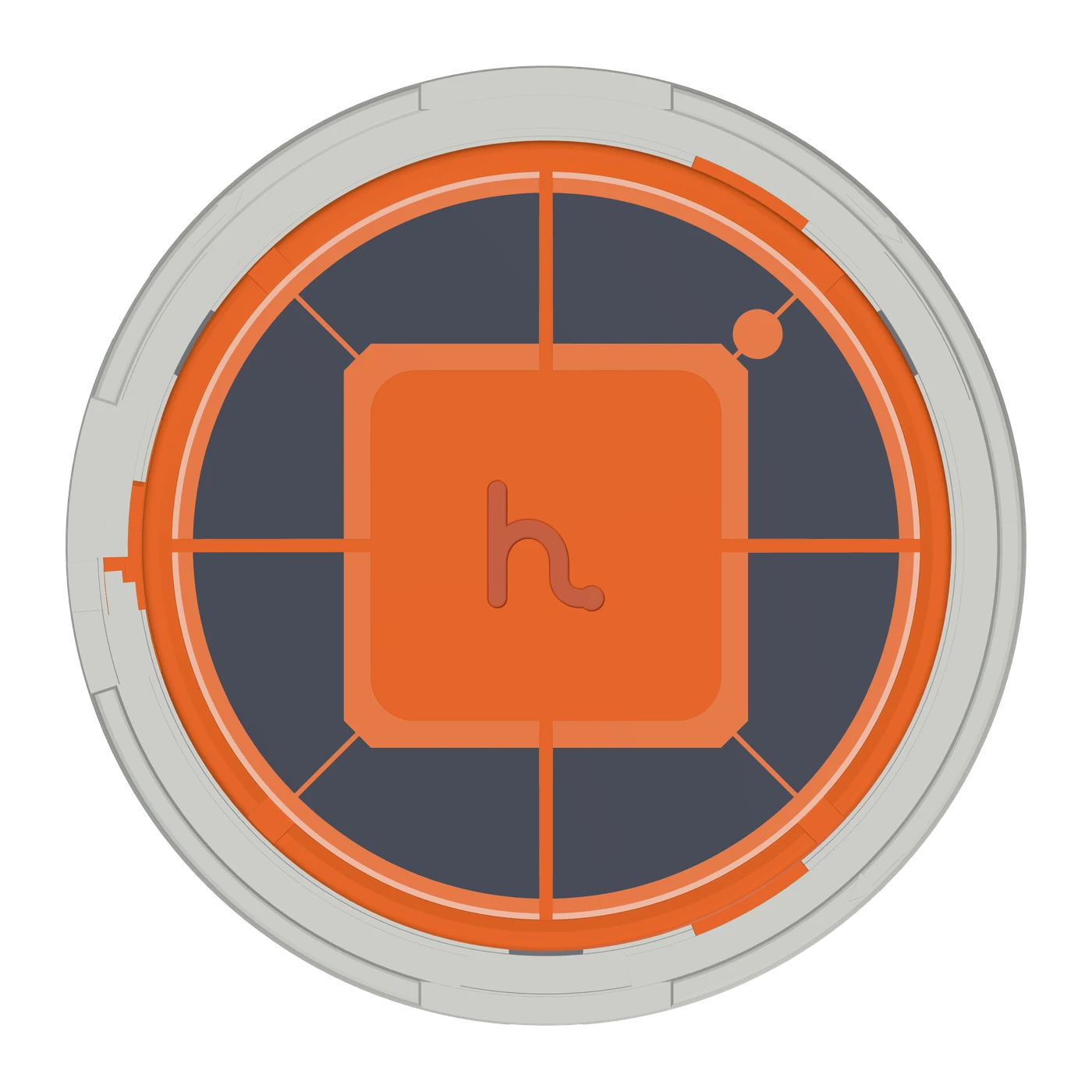
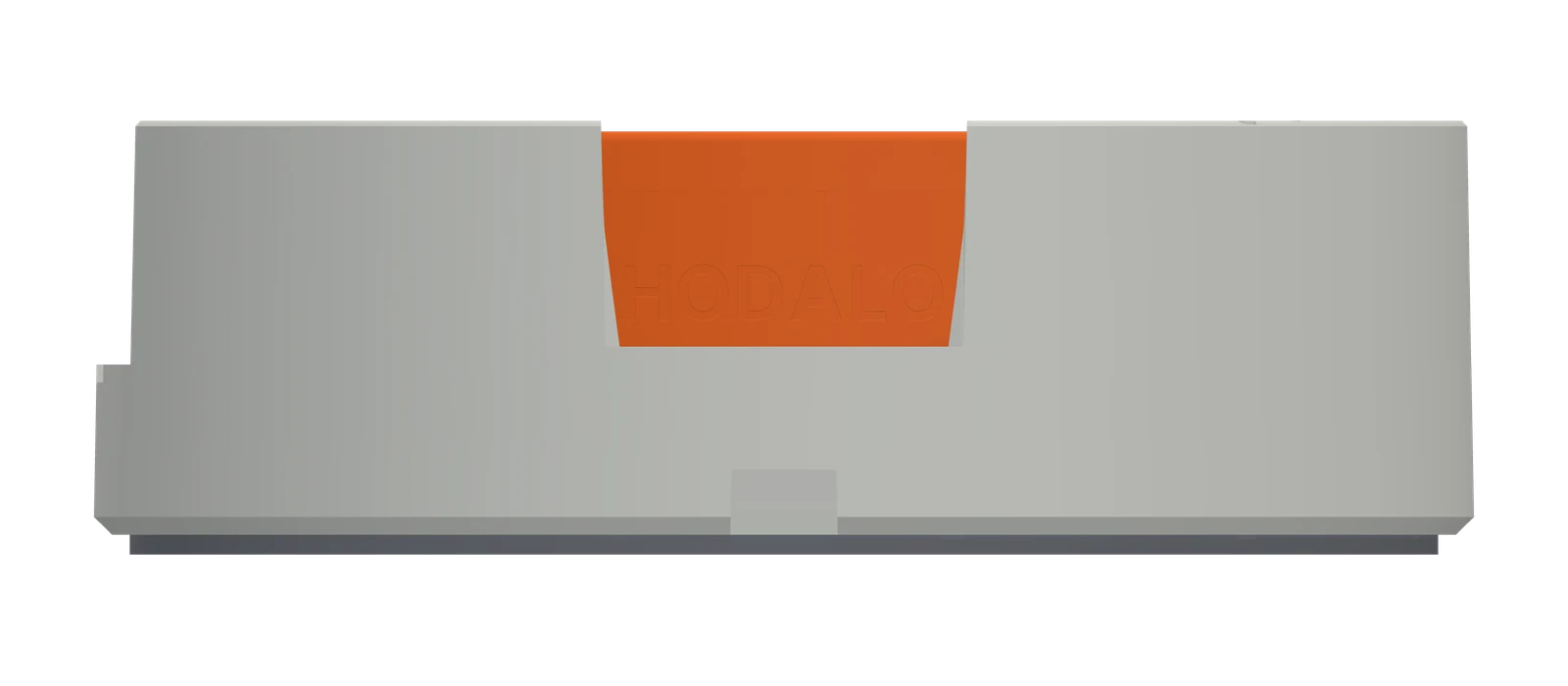
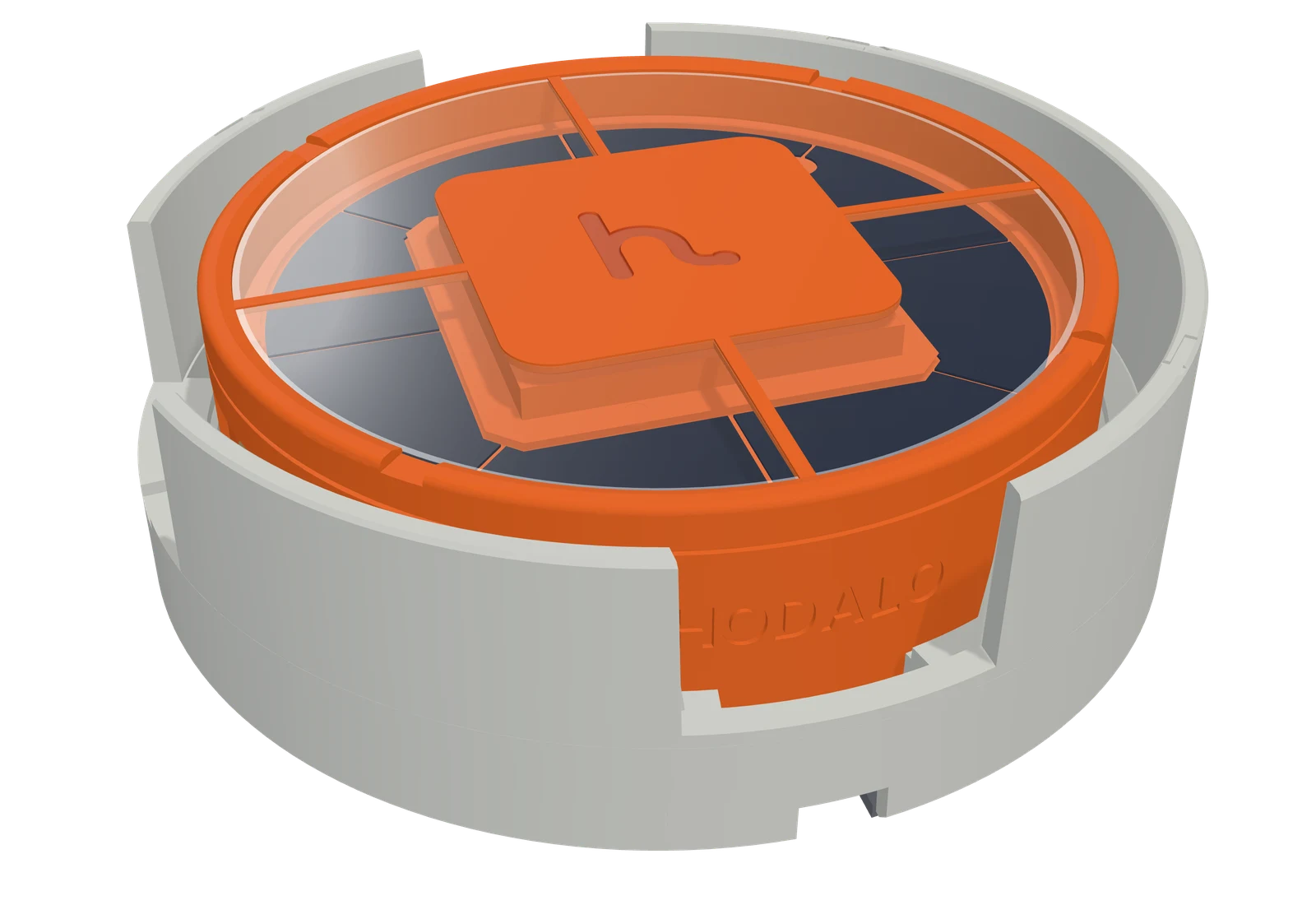
Materials and finish
- Body, rim and cradle
- Outdoor-grade ASA/polycarbonate blend, chosen for sun, salt, heat and cold
- Clear top
- Clear polycarbonate over the solar ring and the antenna, with a UV-blocking hard coat and a water-shedding top coat
- Raised rim
- The rim stands just above the clear top, so flat and straight objects land on the rim and not on the clear top
- Colours
- Orange tag, light-grey cradle (recommended, not yet signed off)
- Construction
- Welded shut at the factory. No seams to open, no parts to service inside.
Durability and sealing
- Water and dust
- Designed for IP68: 2 m under water for 24 hours. Not yet tested.7
- Reporting temperature
- Target: reports from −20 °C7
- Charging temperature
- Target: charges from 0 °C to +60 °C. It does not charge below freezing.7
- Storage temperature
- Target: −40 °C to +85 °C7
- Winter storage
- Designed to stay on the boat through a −40 °C winter. It does not report or charge in that cold.7
- Sun (UV)
- UV hard coat on the clear top. An accelerated sun test is planned, not done.
- Standing and kneeling
- Target: a 1,000 N load on the top, for stepping and kneeling. Not yet shown at +70 °C.7
- Knocks
- Target: stays sealed, with no sharp pieces, after a 20 J blow on the top or in its cradle. Not yet tested.7
Positioning
- System
- GNSS (GPS and other satellite positioning systems)
- How often
- A new position every minute on a trip, or every 2 minutes at lower charge
- Sky view
- Needs open sky. Bodies, seat backs, sails and anything stacked on the tag can block it.
Satellite
- Network
- Iridium NTN Direct, in every tag
- Tilt and water
- Routine reports are sent when the tag is the right way up. Upside down or under water, nothing is sent.9
- Service status
- The service is new and is being rolled out gradually. We have not yet tested a tag on it, and coverage where our customers are is not yet confirmed.2
Mobile
- Network
- LTE-M, in every tag4
- SIM
- Built in and set up before delivery. Nothing to insert.
- Signal strength
- A small sealed tag has a weaker mobile antenna than a phone, most of all on the lowest bands. Where it has no mobile signal it reports by satellite.
Reporting
- Send, with mobile signal
- Every minute, as each position is taken
- Send by satellite
- Estimate: every 2 to 5 minutes while it has charge. On a 10-hour trip from full with no sun, a tag on its own sends every 2 minutes for about 5.5 hours, then every 5. In a group of 4 or more, tags share one message and keep every 2 minutes for the whole trip (in development).3
- Alerts
- Go by the fastest link available and never wait for the next send.
- On the rack
- Occasional check-ins, plus a report when the boat starts moving
- Capsize
- Under water the tag cannot send. A capsize shows as lost contact afterwards. How soon depends on the reporting interval at the time.9
Power and battery
- Power source
- Solar. A ring of solar cells under the clear top charges a sealed battery.
- Solar area
- 13 cm² of solar cell under the clear top.
- Solar cell type
- Back-contact silicon (no metal lines on the front)
- Battery type
- Rechargeable lithium-ion. Sealed in, not replaceable.
- Battery capacity
- About 1.7 Wh (6 kJ) usable (estimate)5
- A cloudy week with no mobile signal
- Estimate: keeps reporting by satellite, sending less often as the charge drops, and does not stop. Figures for the week are still being worked out.5
- Lost boat, upright, no sun
- Estimate: keeps reporting for at least about 27 days, even if it goes missing at the end of a long day out of mobile range. A lost boat reports less often, down to once a day, to save battery.6
Sensors
- Tilt and motion
- Motion sensor that reads tilt and the start of movement
- Water contacts
- Two contacts on the side of the tag tell when the tag is wet or under water
- Limit
- The water contacts read spray on the side of the tag. They cannot tell whether the top is wet or salt-crusted.
Cradle and mounting
- Cradle size
- 77 mm across
- Fixing
- Bonded to the deck with high-strength acrylic foam tape and primer. No electronics in the cradle.
- Cure time
- 3 days before a tag goes on. Cradles on day 1, tags on day 4.10
- Screws
- On polyethylene hulls, two stainless (A4/316) screws into sealed rubber well-nuts, as well as the tape
- Twist-lock
- The tag twists into three lugs and a latch clicks shut
- Key
- Taking a tag off needs the site key
- Any tag, any cradle
- Every tag fits every cradle. The boat’s identity is a QR code on the cradle.
- Base shapes
- Flat decks, curved decks, and a glued patch version for inflatable paddleboards (no tape, no screws)
- Where it goes
- On an open, level part of the deck, away from seats, hatches, rigging and trampolines
Software updates
- How
- Over the air, by mobile signal (LTE-M) only
- When
- While the boat is racked, the tag is charging and the battery has charge to spare
- Without mobile signal
- No over-the-air updates. A service visit is needed.
- What staff see and doThe Hodalo desk
- Fitting cradles and pairing tagsSetup
- What the tag does not doRead the limits
Talk to us
Know where every boat is.
If you run a resort, a camp or a rental dock, tell us about your site and your fleet, and we will tell you plainly whether Hodalo fits.
A short call, no slides. Or write to hello@hodalo.com.
Where we are
This is a plan, not a promise.
- Now Design on paper. No tag has been tested yet.
- Next Satellite link test from a real tag.
- Then Pilot season with a small number of sites, 10 tags per site.
- 2028 First paid deployments (target).